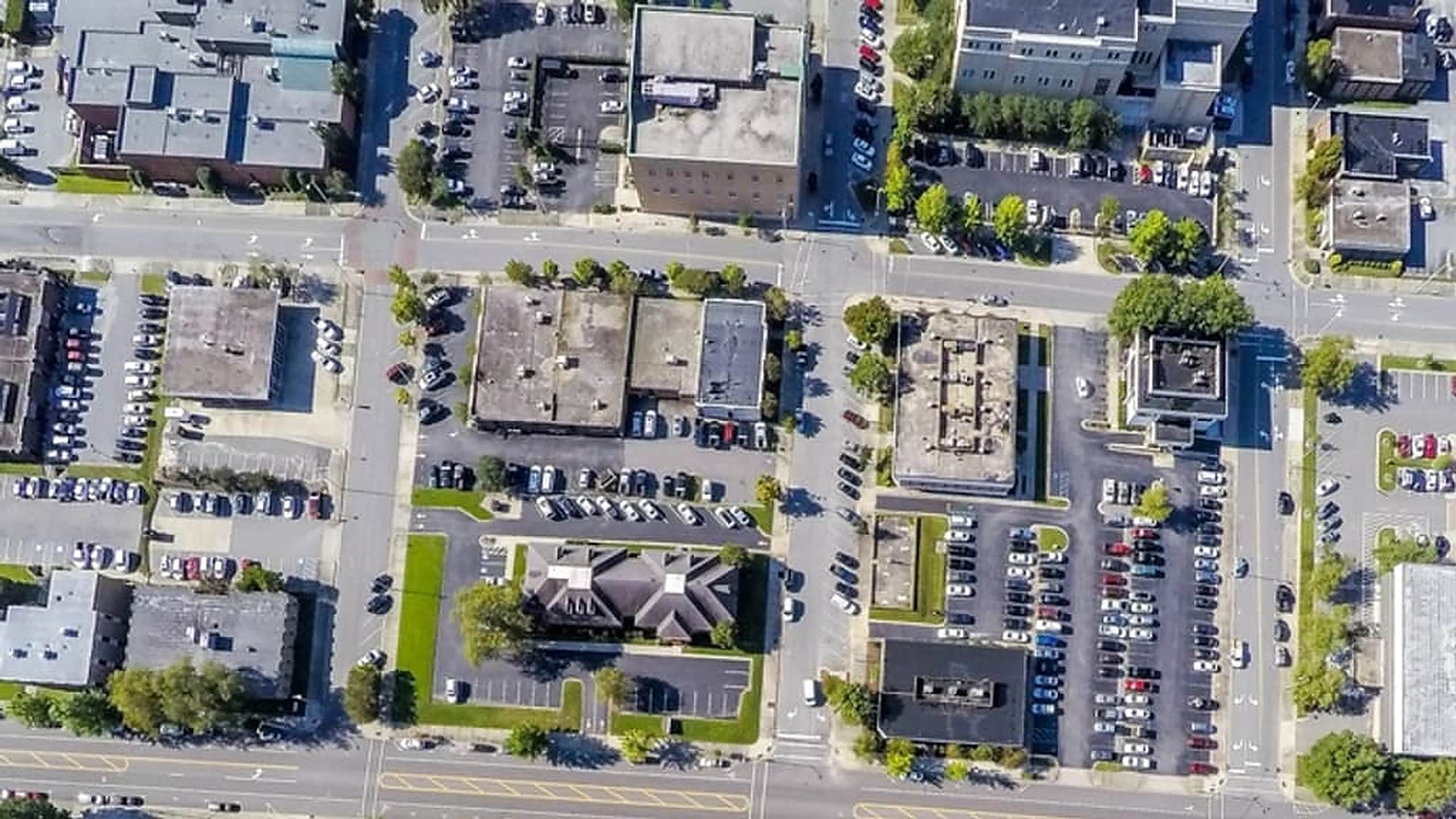
A property report is easier to use when it shows not only the finding, but also what kind of evidence supports it. A current aerial observation, a county parcel record, a derived roof estimate, and an analyst inference should not be read as equivalent facts.
Direct observations
These are features visible in a cited source, such as a building footprint, apparent rooftop obstruction, surrounding land use, or visible solar array. Confidence still depends on imagery date, resolution, angle, cloud cover, and whether the feature is actually identifiable.
Public-record facts
Parcel ownership, assessed use, permit entries, entity registrations, and similar records may be authoritative for a defined purpose, but they can be delayed, incomplete, differently formatted, or disconnected from current operational control.
Derived estimates
Usable-area approximations, distances, density measures, exposure summaries, and composite rankings are calculated from source data. They are useful when the method and input limits are visible.
Analyst inferences
An inference connects evidence to a likely interpretation, such as why a property deserves further research. Inferences should be labeled clearly and should never be presented as confirmed engineering, ownership, performance, or customer-intent facts.
What should affect confidence
- How current and precise the source is.
- Whether independent sources agree.
- Whether the property, parcel, organization, and asset can be matched confidently.
- How much calculation or interpretation is required.
- Whether key records are missing or contradictory.
- Whether a qualified person has manually reviewed the result.
Use confidence to allocate attention
High-confidence property identity may support immediate contact research. Medium-confidence installation timing may justify a permit check. Low-confidence condition context may require records or inspection before it influences outreach. Confidence is valuable because it helps your team spend effort in the right order.